
The diamond edit · 01
A diamond. Beyond the carat.
Natural or lab-grown? Find the balance that feels right for you.
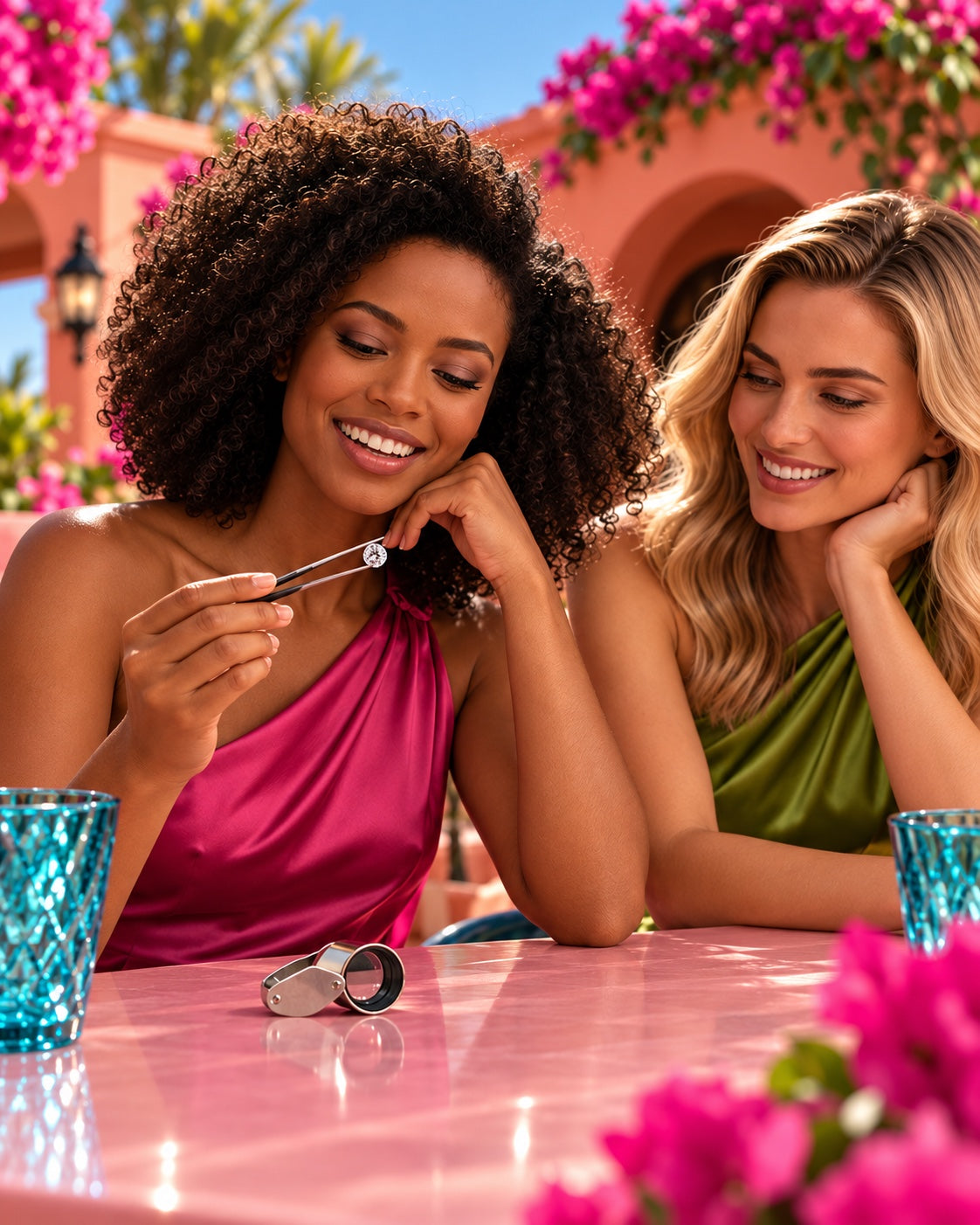
02
Two beginnings
Natural
Formed deep within the Earth under heat and pressure.
Lab-grown
Created using controlled processes: HPHT uses high pressure and heat. CVD builds diamond from carbon-rich gas onto a diamond seed.
Different origins. Both can become a piece with personal meaning.
03
Both are diamond
Natural and lab-grown diamonds have essentially the same chemical, physical and optical properties. Moissanite and cubic zirconia are different materials.
Origin needs specialist testing.
04
Carat isn’t size
1 ct = 0.2 g
Carat tells you weight. Shape and proportions affect how large a diamond looks.
Ask for its length and width in millimetres, then view the stone.
05
Look at light
Shape names the outline. Cut also describes the facets and proportions that shape light’s return.
Look for
Brightness, flashes of colour and the pattern as it moves.
Compare the actual stones in more than one kind of light.
06
Colour and clarity
Colour
Evaluate body colour under controlled lighting. A warm photograph cannot establish a colour grade.
Clarity
Inclusions are internal or surface-reaching features; blemishes are on the surface. Grading uses 10× magnification.
Look at the stone without magnification, too.
07
Price and priorities
Lab-grown diamonds generally cost less than comparable natural diamonds. That can give you more room within your purchase budget.
Compare the whole piece
Use current quotes for the stone and setting you actually want.
If resale matters, ask for any buy-back terms in writing.
08
Read your IGI report
Start with the report
Check the stated origin, measurements and grades, plus any disclosed treatments.
Verify the details
Look up its number on IGI’s website. Confirm the report matches your stone. Ask what supports any sourcing claims.
IGI reports are included for each individual lab-grown diamond over 0.50 ct. Smaller stones do not include an IGI report as standard, regardless of the piece’s combined carat weight. For custom pieces, IGI reports for smaller stones can be requested at an additional cost.
09
Which fits you?
Natural may suit you
You value an Earth-formed origin and the individual stone fits your design and budget.
Lab-grown may suit you
You are comfortable with laboratory origin and want more choice within your purchase budget.
Still unsure? Compare individual stones side by side before deciding.
10
Choose with confidence
Origin. Appearance. Budget.
- What are its measurements?
- What does its report tell me?
- How does it look in different light?
The right balance is personal.